Java Sparrow Diet, Pairing, and a Simple Breeding Setup for Beginners
What Do Java Sparrows Eat?
Diet is the thing that makes or breaks a java sparrow’s health, and honestly, it’s where most beginners either get lucky or get stuck. In the wild these birds live on rice paddies and grass seed heads. In a cage, though, that narrow diet just doesn’t cut it. They need variety, or they’ll plateau physically and never come into breeding condition.
Core Daily Diet
- Finch seed mix (millet-based, not the cheap all-canary blends) should be in the dish at all times.
- Fresh greens two to three times a week: spinach, dandelion leaves, chickweed, broccoli florets, whatever’s in season.
- Cuttlebone or a mineral block, left in the cage permanently, for calcium.
- Fresh water changed every day, plus a shallow bathing dish since these birds like to splash.
Breeding-Season Boosts
About two weeks before you introduce a pair, bump up the protein and calcium. This conditioning window matters more than people think.
- Egg food (boiled egg mashed with crushed biscuit, or a commercial mix) two to three times weekly.
- Soaked or sprouted seed, softer and more nutrient-dense, which makes it easier for parents to feed to chicks later.
- Live or dried insects in small doses (tiny mealworms work well) are optional, but they noticeably help condition breeding pairs, especially hens that are about to start laying.
Go easy on fatty seeds like sunflower or safflower. Java sparrows pack on weight fast, and a chubby bird is a bird that won’t breed well.
How to Pair Java Sparrows Successfully
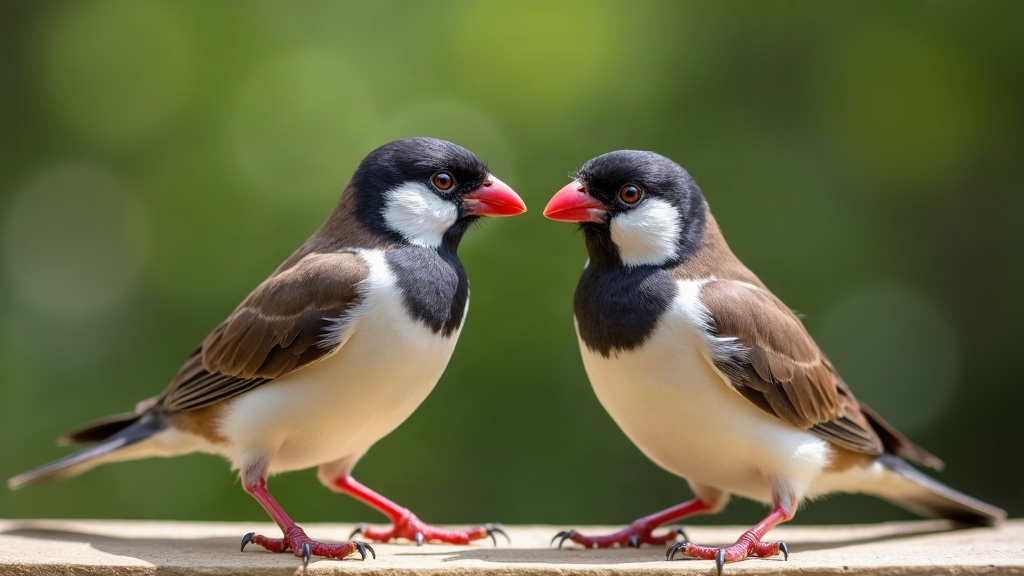
Here’s the tricky part: java sparrows are monomorphic, meaning males and females look almost identical. No flashy color difference to rely on, so beginners often guess wrong.
Sexing Tips
- Males usually sing, a soft warbling tune, while females rarely make that sound.
- Males often have a slightly thicker beak base, but that’s a weak clue on its own, not something to bet on.
- The most reliable options for a beginner are DNA sexing or simply watching courtship, a male bowing and singing toward a particular hen tells you a lot.
Introducing a Pair
- Start them in separate, adjacent cages so they can see and hear each other but can’t physically interact yet.
- Watch for the good signs: mutual preening, sitting shoulder to shoulder on a perch, soft back-and-forth chirping.
- Don’t force it. Chasing, feather-pulling, or one bird constantly fleeing the other means it’s not a match. Split them up and try different birds.
- Introduce them in neutral territory, or a cage larger than either bird’s current space, rather than dropping a newcomer into a cage one bird already considers “theirs.”
These birds are social by nature. Even outside the breeding season, a bonded pair kept together tends to be calmer and healthier than a single bird kept alone.
Simple Breeding Setup for Beginners
No need for a fancy outdoor aviary here. A properly set up indoor cage does the job just fine, and that’s good news if you’re working with limited space.
Cage and Nest Box
- Go with at least 24 x 18 x 18 inches for one pair; bigger is always better if you have the room.
- A wooden nest box around 6x6x8 inches, mounted high in a quiet corner, works well.
- Line it with coconut fiber, dried grass, or soft hay. Skip cotton wool entirely, it tangles around chicks’ legs and feet and can cause real injuries.
Environmental Conditions
- Keep the room at a steady 68-75°F (20-24°C). Swings in temperature stress breeding pairs out.
- Give them 12-14 hours of light daily to mimic natural conditions.
- Put the cage somewhere quiet, away from foot traffic, slamming doors, or a noisy TV. Stress is one of the top reasons pairs abandon a nest mid-clutch.
What Happens After Pairing
- Hens generally lay 4-6 eggs, one a day.
- Incubation runs 13-14 days, and both parents take turns sitting.
- Chicks fledge around 3-4 weeks and become fully independent by 6 weeks. At that point, separate them from the parents, otherwise the adults may try to nest again too soon, which wears them down.
Common Beginner Mistakes to Avoid
- Pairing birds too young. Wait until they’re at least 6-8 months old and genuinely mature, not just full-grown in size.
- Skipping conditioning. Jumping straight into pairing without a few weeks of better food first tanks your success rate.
- Cramming too many pairs together. More pairs in one space means more squabbles over territory and nest boxes.
- Pairing a molting bird. That energy needs to go into regrowing feathers, not laying eggs. Wait it out.
Conclusion
Boil it down and java sparrow breeding rests on three things: a solid, nutrient-rich diet with the right boosts before pairing, pairing based on what you actually observe rather than a guess, and a calm nesting setup with the right dimensions, materials, and quiet surroundings. Nail those three, and even someone breeding for the first time can end up with healthy clutches and strong, well-raised chicks, season after season.