Pionus Parrot vs Quaker Parrot: Best Quiet Talker for Owners
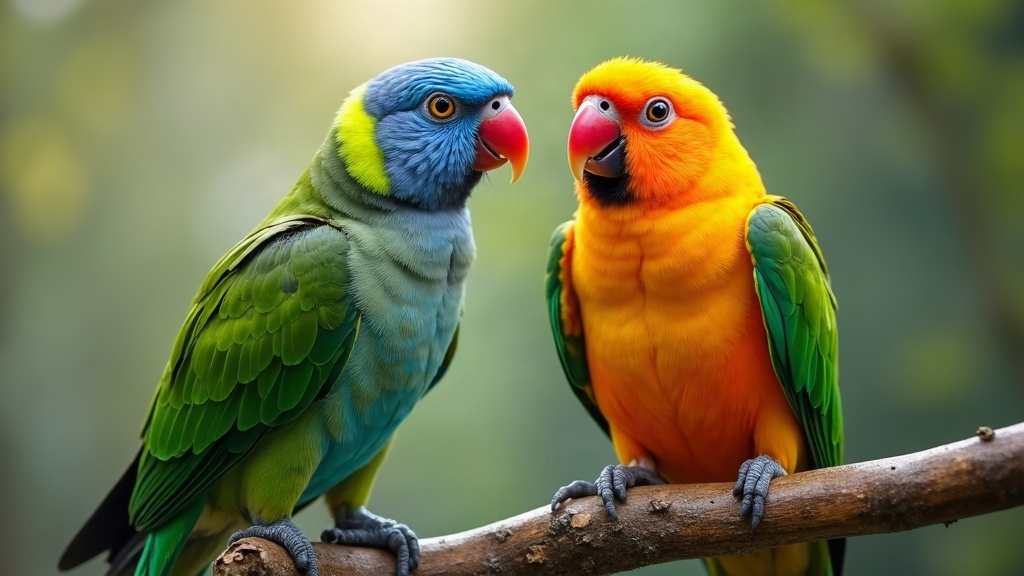
If you want a parrot that talks but won’t get you a noise complaint from apartment 4B, the Pionus and the Quaker parrot are probably the two smartest picks on the market. Neither one screams like a macaw or a cockatoo, that much they have in common, but their noise style and their talking chops are pretty different. Short version: Pionus parrots stay quieter overall but talk in a softer, mumblier voice, while Quakers chat more often and more clearly, with the occasional loud outburst thrown in. Which one “wins” really comes down to whether you want near-silence or a bigger vocabulary.
Noise Level: Round One
Pionus Parrots
Pionus parrots (Blue-headed, White-capped, Bronze-winged) get called the “quietest parrot species” in the mid-size category more often than not, and for good reason. Their natural sounds include:
- Low-pitched grunts and wheezes instead of shrieks
- The occasional contact call, mostly around dawn and dusk
- A weird heavy-breathing sound they make when excited (sounds alarming the first time, totally harmless)
Most owners describe Pionus noise as background-level, the kind of thing you’d hear in the same room but that wouldn’t carry through a wall or bother a neighbor in the next apartment.
Quaker Parrots
Quakers (Monk Parakeets), on the other hand, are just chattier animals by nature. They:
- Vocalize all day long, not just at sunrise and sunset
- Have a sharp, piercing contact call that comes out when they’re unhappy or want attention
- Can get surprisingly loud for such a small bird, especially when startled or worked up
Quakers aren’t nonstop screamers, but they rarely go quiet for long stretches either. If your priority is a bird that stays mellow most of the day, Pionus wins this round.
Talking Ability: Round Two
This is where Quakers usually take the lead.
Quaker parrots are known for:
- Speech that’s clear and well-enunciated, often clearer than what you’d get from a much bigger parrot
- Picking up words and short phrases fast
- Using speech in context: “hello” when you walk in, “bye” when you head out the door
Pionus parrots can talk too, but:
- Their speech tends to come out quieter and a bit mumbled
- Their vocabulary is usually smaller than a Quaker’s
- Not every bird talks at all; some stay silent no matter how much training you put in
If talking is the deciding factor for you, and you can live with moderate noise, the Quaker is the stronger pick.
Temperament Differences
| Trait | Pionus | Quaker |
|---|---|---|
| Noise level | Low | Moderate |
| Talking clarity | Fair | Excellent |
| Activity level | Calm, low-key | Energetic, busy |
| Cuddliness | Independent, not overly clingy | Affectionate, bonds strongly |
| Beak strength | Moderate | Strong for its size |
| Lifespan | 25-30 years | 20-30 years |
Pionus parrots have earned a reputation as “the introvert’s parrot.” They’re happy sitting quietly nearby and don’t demand constant attention. Quakers are more dog-like in how eagerly they seek interaction, and if they get bored or under-stimulated, that energy often turns into noise.
Which One Fits Your Lifestyle?
Choose a Pionus if you:
- Live in an apartment or a house with thin walls
- Want a calm bird that won’t need hours of daily interaction
- Are fine trading vocabulary for quiet
Choose a Quaker if you:
- Want a bird that talks back and mimics phrases
- Have the time for daily training and interaction
- Can tolerate the occasional loud call, especially around feeding time or when the bird gets excited
A Note on Legal Restrictions
Check your local laws before you decide anything. Quaker parrots are banned or restricted in several U.S. states, including California, Georgia, and New Jersey, mostly because of agricultural concerns over feral populations. Pionus parrots don’t carry any such restrictions in the U.S. If you happen to live in a restricted state, that fact alone might settle the whole question for you.
Final Verdict
Neither bird counts as truly “silent,” no parrot really does. But if you’re chasing the quietest companion possible, the Pionus parrot is the safer bet, giving up some talking flash for genuine peace and quiet. If you’d rather have a bird that holds something like a mini-conversation with you, and you don’t mind a bit more daily chatter, the Quaker parrot gives you better speech in exchange for a bit more volume.
Either way, both species make far better apartment companions than the loud crowd, conures, cockatoos, macaws. Really, you’re not choosing between quiet and loud here. You’re choosing between quiet and calm, or chatty and clear.