Why Do Budgies Bob Their Heads When They See Themselves in a Mirror?
Why Do Budgies Bob Their Heads When They See Themselves in a Mirror?
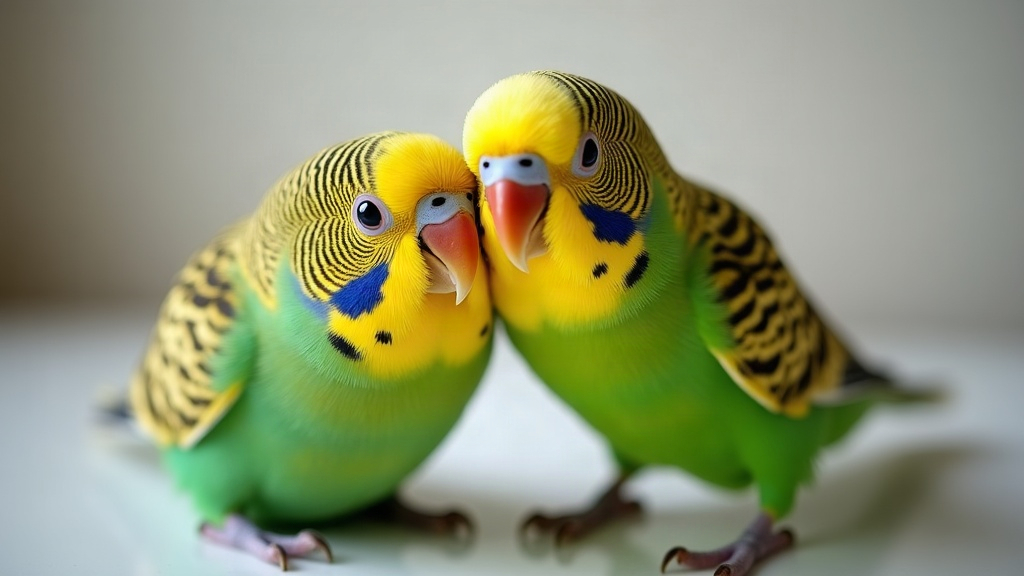
Your budgie bobs its head at the mirror for one simple reason: it genuinely believes there’s another budgie staring back at it. That imaginary companion sets off a whole cascade of social behavior. Head bobbing is one of the most basic phrases in budgie body language, and depending on context it can mean excitement, courtship, a demand for attention, or just a cheerful bird chatting away at what it thinks is a new buddy. Most of the time this is harmless and honestly pretty funny to watch, but in a handful of cases it can tip into frustration or unhealthy attachment.
Understanding the Behavior
Here’s the thing budgies (also known as parakeets) can’t do: recognize themselves. Put a mirror in front of one and it doesn’t see its own reflection, it sees a total stranger copying its every move, second for second. That stranger never flies off, never gets bored, never pecks back in annoyance. For a flock animal that’s wired to crave company, that’s both irresistible and, at times, a little disorienting.
So what does a budgie actually do when it meets its “new friend” in the glass? A few things tend to happen:
- Greeting and excitement: A quick, energetic bob is basically the bird’s version of “oh hey, hi there!”
- Courtship and bonding: Slower, more rhythmic bobbing, sometimes paired with beak tapping or even regurgitating food, is a courtship display. This is the budgie equivalent of bringing flowers.
- Begging for attention: Younger birds, especially hand-raised ones, will bob their heads when they want food, a scratch, or just to be noticed.
- Vocalizing: A lot of head bobbing happens in time with chirps, chatters, or full-on singing. It’s part of the conversation, not separate from it.
- Stretching and comfort: Sometimes a calm, loose bob while perched just means the bird is relaxed and feels safe. Nothing dramatic going on.
Is Mirror Bobbing Healthy?
For a lone budgie, a mirror can genuinely be a good source of entertainment. Owners often watch their bird bob, sing, and carry on with the reflection for ten, twenty minutes at a stretch, and that engagement is generally a good sign, not a bad one.
That said, there’s a flip side worth keeping an eye on:
- Obsessive attachment: Some budgies fall so hard for their reflection that it becomes their favorite companion, full stop, ahead of you. They’ll try to feed it, camp out next to it all day, or get snippy if you so much as move it two inches.
- Frustration: A mirror bird never actually answers back the way a real budgie would. No preening, no feeding, no flying over. For some birds, that mismatch builds up into pecking at the glass, pacing back and forth, or regurgitating onto the mirror over and over.
- Territorial behavior: Male budgies in particular can shift from bobbing to lunging, treating the reflection like a rival male that needs to be run off.
How to Tell Happy Bobbing From Frustrated Bobbing
| Happy, healthy bobbing | Possible frustration or over-attachment |
|---|---|
| Bobbing with singing or chirping | Silent, fixated staring at the mirror |
| Takes breaks to eat, play, preen | Ignores food, toys, and you for the mirror |
| Responds to you when you approach | Hisses or bites when you come near the mirror |
| Loose, relaxed body posture | Flattened feathers, raised wings, pacing |
What to Do About It
If your budgie’s mirror routine stays light and playful, honestly, just let it be. It’s not a problem to fix. But if you’re seeing the warning signs above, here’s a practical order of steps to try:
- Limit mirror time. Instead of a permanent fixture in the cage, offer it for short supervised sessions, maybe 15 to 20 minutes a day.
- Add more toys and foraging. Shreddable paper, bells, hidden-treat puzzles: anything that gives the bird something else to chew on, literally and mentally.
- Increase real social time. Talk to your budgie, train it, sit near the cage while you work. A real relationship beats a piece of glass every time.
- Consider a real companion. If your schedule genuinely doesn’t allow for enough one-on-one time, a second budgie is usually the best long-term fix, and it tends to break the mirror fixation almost immediately.
- Remove the mirror entirely if you see aggression toward it or the bird starts skipping meals over it.
Frequently Asked Questions
Do all budgies bob their heads? Most do at some point, though how often and how intensely varies a lot from bird to bird. Age, personality, and sex all play a role. Males, especially, tend to bob and sing more during courtship.
Is head bobbing ever a sign of illness? Occasional bobbing is completely normal. But watch out for constant bobbing, bobbing paired with labored breathing, or tail bobbing while the bird is at rest, plus fluffed-up feathers or a sudden drop in appetite. Any of that combo warrants a trip to an avian vet, not a wait-and-see approach.
Do budgies know the mirror isn’t real? Nope. Budgies fail the classic mirror self-recognition test that scientists use with animals, which means as far as your bird is concerned, that’s a real, separate budgie in there.
Conclusion
Nine times out of ten, a budgie bobbing at a mirror is just being social: greeting, flirting, or chatting with what it’s convinced is a new friend. The real question is balance. Playful bobbing that comes with regular breaks for food and play is nothing to worry about. Fixated, aggressive, or obsessive bobbing is a different story, and it usually means the mirror has crossed from fun into a problem. Keep an eye on the body language, dial back mirror access when needed, and make sure your budgie is still getting the real, live interaction it actually needs from you.