How to Socialize a Hand-Fed Baby Conure with a Dog and Cat
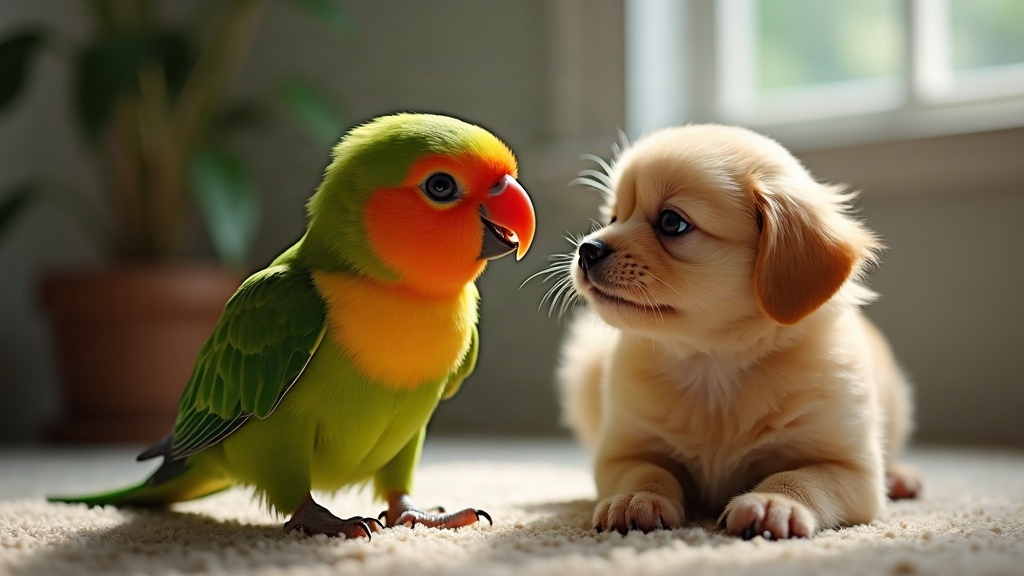
Socializing a hand-fed baby conure with a dog and cat can absolutely work, but it takes structured introductions, constant supervision, and a realistic understanding of predatory instinct. The goal here isn’t to make your dog and cat “friends” with the bird the way they might bond with each other. It’s to build calm, controlled coexistence where nobody gets hurt and everyone, feathered or furry, feels safe.
Why Hand-Fed Conures Need Special Care Around Other Pets
Hand-fed baby conures are trusting, curious, and often downright fearless around people. That same trust, though, can make them careless around dogs and cats. A wild-raised bird learns to read predator body language from day one. A hand-fed conure hasn’t had that lesson. So the job falls on you: you have to manage every single interaction until the bird picks up its own healthy caution and your dog or cat builds reliable impulse control.
Worth remembering too: dogs and cats carry strong prey drives toward anything small, fast, and chirping. Even a golden retriever who naps 18 hours a day or a cat who can barely be bothered to chase a laser pointer can react in a split second if the bird flutters the wrong way. Socialization here is about managing risk, not pretending it doesn’t exist.
Step 1: Separate Spaces Before Any Introduction
Before your conure even meets the dog or cat, get these basics locked down:
- A bird-only room or cage zone the dog and cat cannot access unsupervised
- A secure cage with a locking door (conures are notorious little escape artists, don’t underestimate them)
- A baby gate or closed door as a physical barrier whenever you’re not actively watching
Give your conure 1-2 weeks to settle into its new home before introducing any other pets. Stress early on can show up later as feather plucking or nonstop screaming, and that’s a much harder problem to fix after the fact.
Step 2: Scent and Sound Introduction First
Dogs and cats lean heavily on scent and sound, often more than sight. Before any face-to-face meeting:
- Let your dog or cat sniff a towel or perch the conure has used
- Let them hear the bird’s chirps and calls through a closed door for a few days
- Reward calm behavior near the bird’s room with treats, every single time
This takes the edge off that first visual meeting. By the time they actually see each other, the bird’s smell and sound aren’t novel anymore.
Step 3: Controlled Visual Introductions
Once your pets seem neutral, not fixated or whining at the door, you can move forward:
- Keep the conure in its cage. Never free on a shoulder or hand at this stage.
- Leash your dog, or keep your cat on a harness or in a carrier nearby.
- Allow short, calm viewing sessions, maybe 2-5 minutes, from a distance.
- Reward relaxed behavior from the dog or cat the moment you see it.
- End the session before anyone gets wound up.
Repeat this daily. Only shrink the distance if both animals stay genuinely calm, not just tolerant.
Step 4: Teach a Reliable “Leave It” or “Off” Command
Before the conure is ever out of its cage with the dog or cat in the room, your dog needs to respond to “leave it” without fail, and your cat should have a clear escape route and zero interest in jumping toward the cage.
Practice the command away from the bird first. A dog that only “mostly” listens isn’t ready. Once it’s solid elsewhere, bring it into the bird’s presence gradually.
Step 5: Supervised Out-of-Cage Time
Only after weeks of calm visual exposure should the conure come out of its cage with the dog or cat anywhere nearby:
- Keep the dog leashed at first, even indoors, even in your own living room
- Never leave the room, not even for 10 seconds to grab your phone
- Use a playstand positioned far from any furniture the cat can leap from
- Watch for stalking postures in cats (low body, twitching tail, fixed stare): that’s your cue to end the session right then, no negotiating
Signs It’s Not Working
Stop and reassess if you notice:
- The dog whining, barking, or lunging toward the cage
- The cat sitting and staring at the bird for long stretches, over and over
- The conure screaming, panting, or flattening its feathers whenever the pets come near
- Any attempt to paw, bite, or jump at the cage
Some animals just shouldn’t be unsupervised together, period, and that’s fine. Permanent separation with secure barriers is a completely legitimate long-term setup, not a failure.
Long-Term Safety Rules
- Never leave a conure out of its cage unsupervised with a dog or cat in the house, not even “just for a minute”
- Keep the cage on a stand, not the floor, well out of jumping range
- Clear the cage area of dangling cords, curtains, or toys a cat could use as a climbing aid
- Reassess the relationship every few months. Animals’ tolerance shifts with age, boredom, or a new routine
Conclusion
Socializing a hand-fed baby conure with a dog and cat is doable with patience, slow exposure, and strict supervision, but it’s never a project you finish and forget. Keep the caging secure, keep introductions calm and controlled, and keep the boundaries clear. Do that consistently and you’ll end up with a household where everyone coexists safely, even if the bird and the cat never quite become friends.